
I'm Dreaming of a Sparkling Christmas
It goes without saying that we all like to feel special at Christmas, we all eat a little more decadently and dress in our best when we enjoy the festivities. It is a time of celebration, whether with parties full of people or taking time to ourselves for a little indulgence. What better way to enjoy that than with a special bottle of fizz?
Champagne
We usually think of the obvious choice, Champagne, at Christmas. But why? Champagne as we know it today, with its sparkling nature, only truly emerged in the 19th century. However, its association with luxury can be traced back to the French Royal Court of King Louis XV in the 18th century, where it was enjoyed at Versailles as a symbol of prestige and indulgence. That ideology remains today, reflected in the premium prices you pay for the wine. Christmas is the perfect time to enjoy such a luxury when celebrating the festive season.
André Clouet offers a very classic expression with their Blanc de Noirs Grande Réserve, made with 100% Pinot Noir. Around 5% of its base wine is aged in barrel and the bottle is laid down for 36 months on the lees, with 30% reserve wine added. The result is an exotic bouquet of apple, citrus, honey and vanilla, accompanied by a rich mouthfeel.
Lombard are unique in their focus on single-plot cuvées for precise terroir expression. Their Grand Cru Village Mesnil-sur-Oger, named after an old French expression from the 19th century used to describe an elegant woman, is made with 100% Chardonnay. It presents a pale gold colour with very fine bubbles, notes of green lemon and flinty minerality, crisp acidity and a saline finish.
Location, location, location
Yet Christmas fizz is not exclusive to Champagne. Crémant is a fantastic alternative, made in the same traditional method but with only half the price tag. Excellent Crémants come from Alsace, the Loire Valley, Bordeaux and Burgundy, each reflecting different styles based on their local varieties.
In the UK, we have seen the dramatic rise of Prosecco as a fruitier alternative, as well as Bucks Fizz, offering accessible options without the high price. Italy also enjoys a range of festive sparkling wines: Lambrusco (a sparkling red from Emilia-Romagna), Asti (a sweeter Moscato d’Asti served with dessert), Franciacorta (made using the same method as Champagne) and, of course, Prosecco. Here, the choice is often guided by the cuisine.
If we look to Spain, Cava, another traditional-method sparkling wine, is very common at Christmas for toasts and moments of gratitude.
In the UK, English Sparkling Wine has become a hugely popular alternative to Champagne. With a very similar style and quality, using the same grapes and often grown in chalky soils reminiscent of northern France, the wines are gaining strong recognition. Chapel Down recently won notable praise in a blind tasting held in America with Fred Sirieix, where 67% of participants preferred it to Champagne, describing it as crisp, refreshing and more delicate.
Chapel Down Brut is a blend of Chardonnay, Pinot Noir, Pinot Meunier and a touch of Pinot Blanc. Ageing on lees delivers classic autolytic notes of freshly baked bread and richness, perfectly balanced with fresh red apple, quince and hints of strawberry.
For Prosecco lovers, Azzillo Prosecco offers a lovely balance of sugar and acidity, with peach, green apple and floral notes. You can also enjoy Prosecco Superiore Brut from the top-quality appellation of Valdobbiadene by Bortolotti, an exemplary wine showing elegant, lively notes of hedgerow blossom and white fruit, with rounded apple and a creamy mousse.
Pupitre Cava Tradicional Brut blends the classic Spanish varieties Xarel-lo, Macabeo and Parellada. It showcases a colourful bouquet of acacia, yellow apple and a hint of aniseed, followed by a palate of fresh lemon and green apple coated by a fine mousse for a rounded sparkling finish.
Think pink
A less common style is sparkling rosé, which is a great option for Christmas as we are surrounded by forest fruits - blackberries, raspberries and cherries. There is a wide range of wines to choose from, offering delicate floral bouquets or richer styles that pair perfectly with seasonal cuisine such as spiced meats and cheeses.
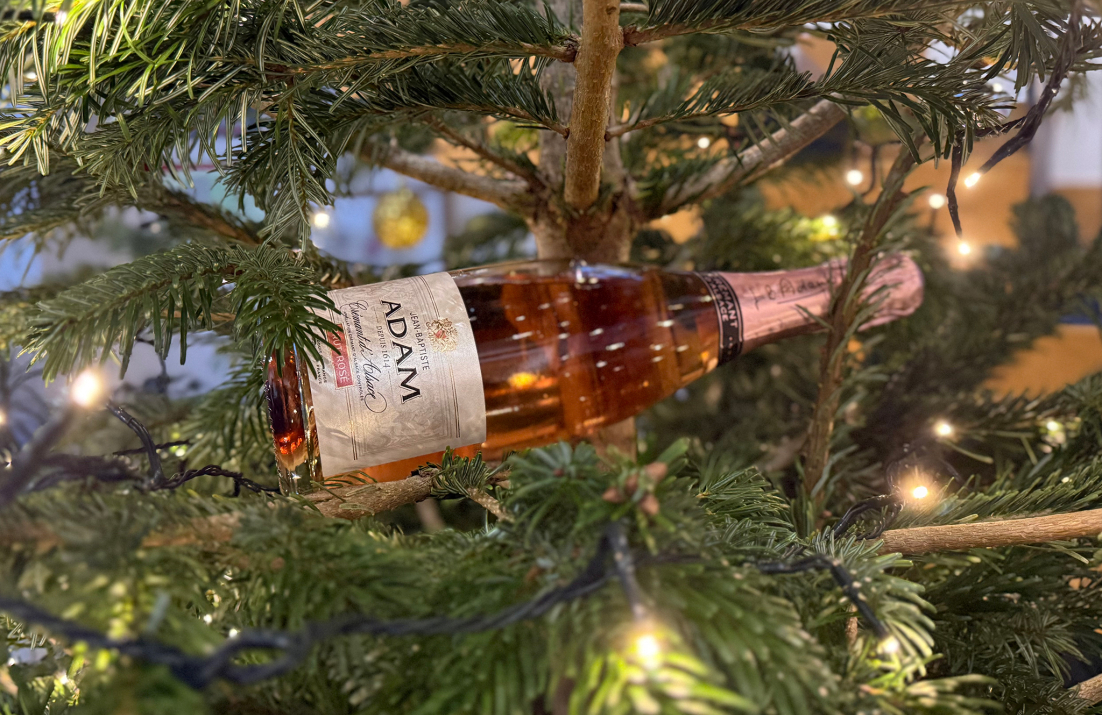
The Crémant d’Alsace Rosé by Jean-Baptiste Adam is an excellent example, pairing beautifully with charcuterie as well as light desserts like macarons. Made from 100% Pinot Noir using the saignée method (bleeding the juice off the skins), it gains its salmon-pink colour. The palate is refreshing and zesty, with crisp acidity balancing the creamy mouthfeel and fine bubbles, all complemented by red-berry flavours.
Timeless tradition
We are undoubtedly drawn to sparkles, wherever they come from. Sparkles are a dynamic theme at Christmas, often associated with the Northern Hemisphere’s snow, sparklers and sparkling outfits. It’s no wonder we also want to drink something sparkling! There is something dramatic about the pop of a cork and the exhilaration of fizz in your glass, adding vibrancy to match our celebratory energy.
Some even choose to open their bottles with a sabre for extra theatrics. A sabre is designed to slide cleanly up the bottle, removing the cork and top of the neck in one motion. In reality, a sturdy kitchen knife can work (with great caution!), but the sabre adds dramatic pizzazz. This technique should only be attempted on traditional-method sparkling wines due to the pressure required within the bottle, so Crémant, Cava or, if you’re feeling brave, your Christmas Champagne!
Indulgence and feasting
Fizz complements the indulgence of canapés and party food. Supermarkets promote 3-for-2 deals on delicious bites like macaroni cheese bites, miniature pies, salmon blinis and more. Feasting at this time of year is not a modern invention: Neolithic communities are believed to have eaten spit-roasted pork, sloes and blackberries in winter feasts.
The Romans celebrated Saturnalia in December with colourful clothing, days of feasting and plenty of wine. Medieval monks and nuns also enjoyed merriment at Christmas with special foods, spices, herbs and roasted meats, often consuming three times their usual daily intake, as reflected in their spending records, which included luxuries such as imported French wines.
We can thank the Tudors for turkey; meanwhile, I am glad that turtle soup from the Georgian era didn’t become tradition! They enjoyed wines similar to modern-day mulled wine, while Victorians transformed Christmas into a more family-centred celebration, enjoying figgy pudding, gingerbread and some of the finger foods we still enjoy at parties today. These treats were not exclusive to royal courts, as food was also shared with the poor during this season.
Our festive experience has evolved over the centuries, yet at its core remains indulgence and merriment - whether king or pauper.
So when you enjoy your feasts and fizz this festive season, you can rest assured that these traditions stem from generations past. At its heart, Christmas is a time to celebrate, indulge in the finer things and live like royalty with a glass of bubbles.
By Molly Newport, Senior Wine Buyer
