Last of the Summer Wine: A Visit to Sandridge Barton

At Ellis Wines, we believe that great wine starts with great people. Our team loves getting out into the vineyards to meet the producers we work with, discover the passion behind every bottle and explore the wines being made both here in the UK and around the world. This summer, our Head Wine Buyer Megan headed to Devon with Purchasing Manager, Richard and Wine Buyer, Ben to visit Sandridge Barton and experience first-hand what makes English wine so exciting. Here, Megan shares a few highlights from their visit.
One of the great joys of working in the wine industry is the opportunity to travel, visit wineries and see where the delicious wines we drink come from. Often with this we think about heading abroad and can easily overlook what’s on our doorstep, so this summer Richard, Ben and I made our way west to south Devon to visit Sandridge Barton, and we couldn’t have chosen a better summer to do it!
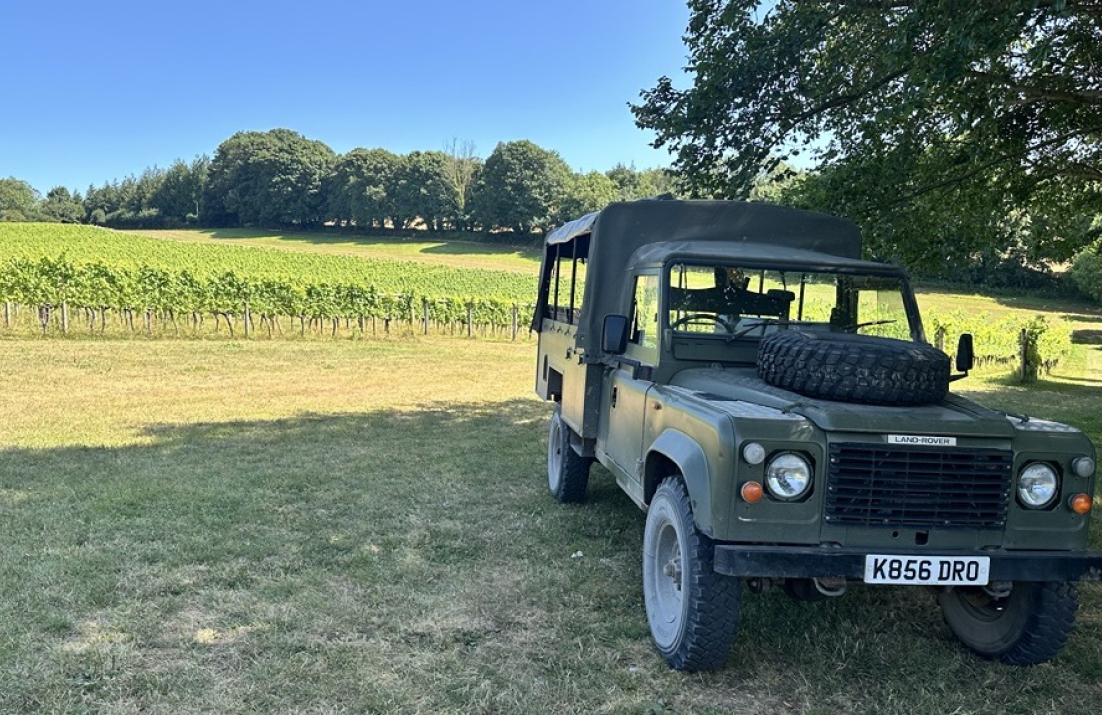
We were met by Tom Wedgery, who took us in their ‘vineyard safari’ Land Rover through the estate and to the vineyards for a tasting with a view.
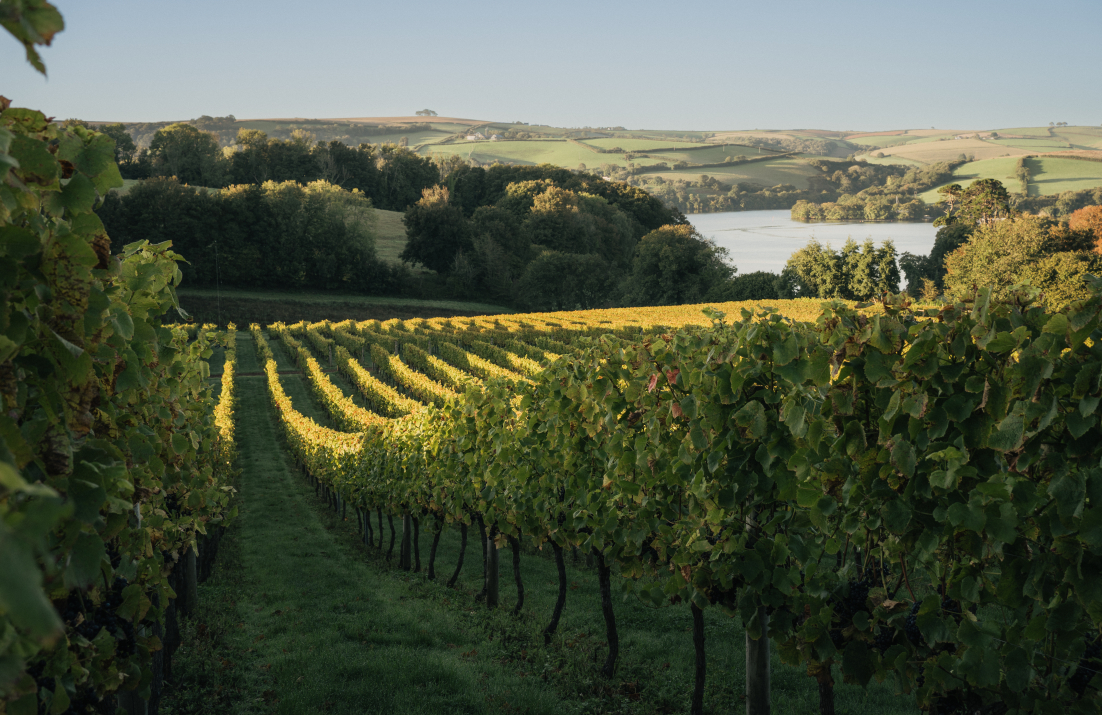
Sandridge Barton is nestled between the coast and the river Dart, a saltwater river, which moderates the temperature and elongates the growing season, helping to avoid spring frosts. The vineyards are on clay soils, something which has been a lifeline this summer with the heatwaves we have experienced. It was clear to see the impact and importance that the soils have in the vineyards when we visited; the grass was scorched but the vines were absolutely thriving, and this is due to the water reserves deep in the soils. Devon experienced a lot of rain over the winter, and this water is retained in the clay rich soil, meaning the vines benefitted from sufficient water reserves and could grow and ripen fully in the sunny conditions.
Of course, these very same vineyard conditions can be challenging in wet years, if the ground gets waterlogged and the team have to battle with issues such as downy mildew, but happily the 2026 vintage looks like it’s an absolute corker!
Sustainability is very important to Sandridge Barton, and they are part of the Higher Level Countryside Stewardship Scheme. As a part of this scheme, they have 10-meter wildflower borders in the vineyards and have bird and bat boxes installed to help preserve endangered native species. In fact, the vineyard area of Sandridge Barton is only about 10% of the entire estate, they have specific areas dedicated to rewilding and hope to help restore natural habitats to encourage the return of native wildlife. On top of this they have solar panels, heat pumps and a ‘biobubble’ which processes all winery and estate waste safely back into the ecosystem.
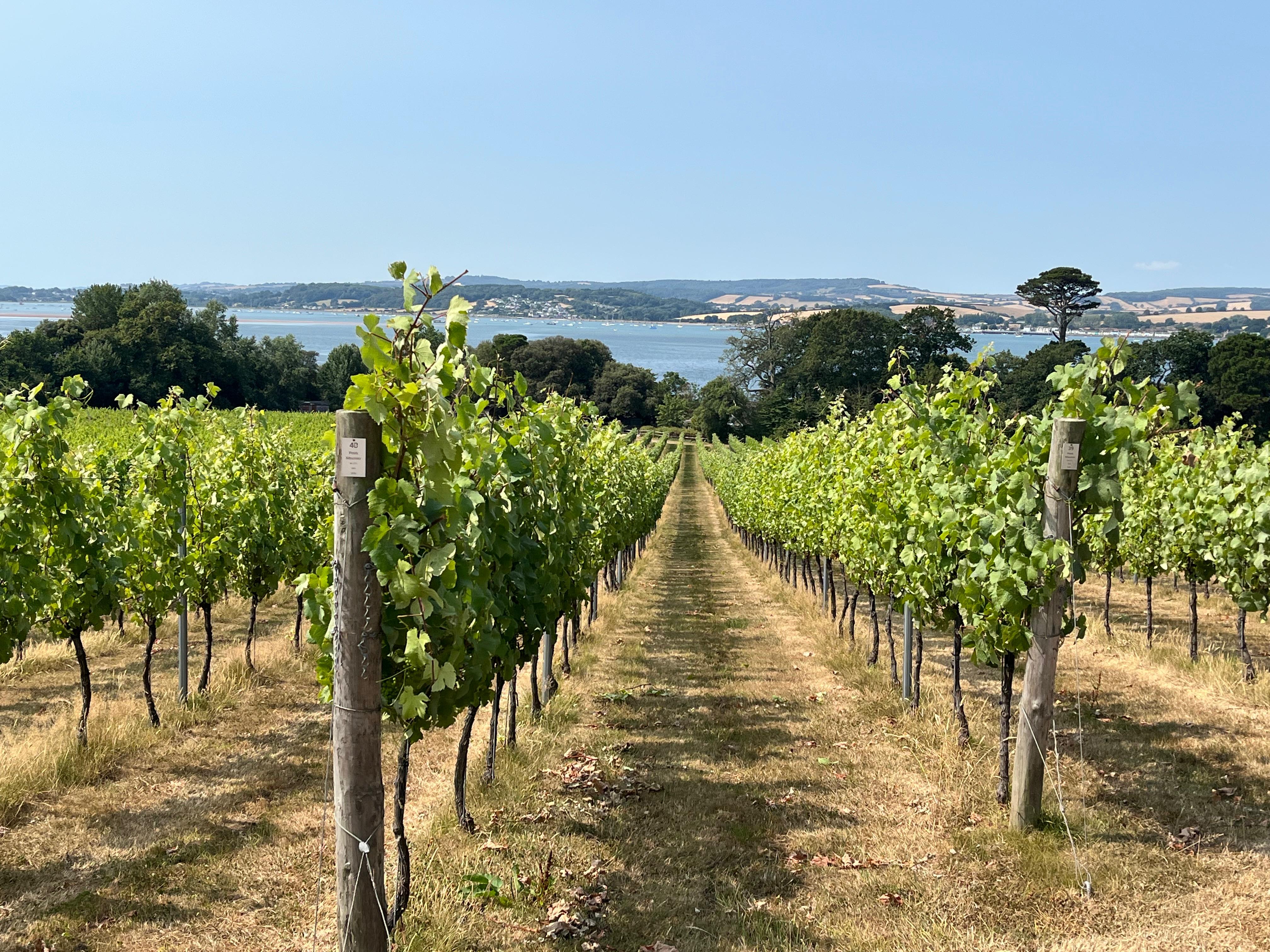
In the vineyard, they have banned all pesticides and herbicides, Tom explained to us that when needed, they are now using a ‘bio-stimulant’ which they use to combat downy mildew, it is essentially a vaccine which contains dead downy mildew in it and tricks the vine into thinking it is under attack forcing it to thicken cell walls and making it harder for downy mildew spores to penetrate the vine. This is a fairly new thing, but seems to be working well, and creates a natural response rather than having to rely on chemicals which then get into the soil.
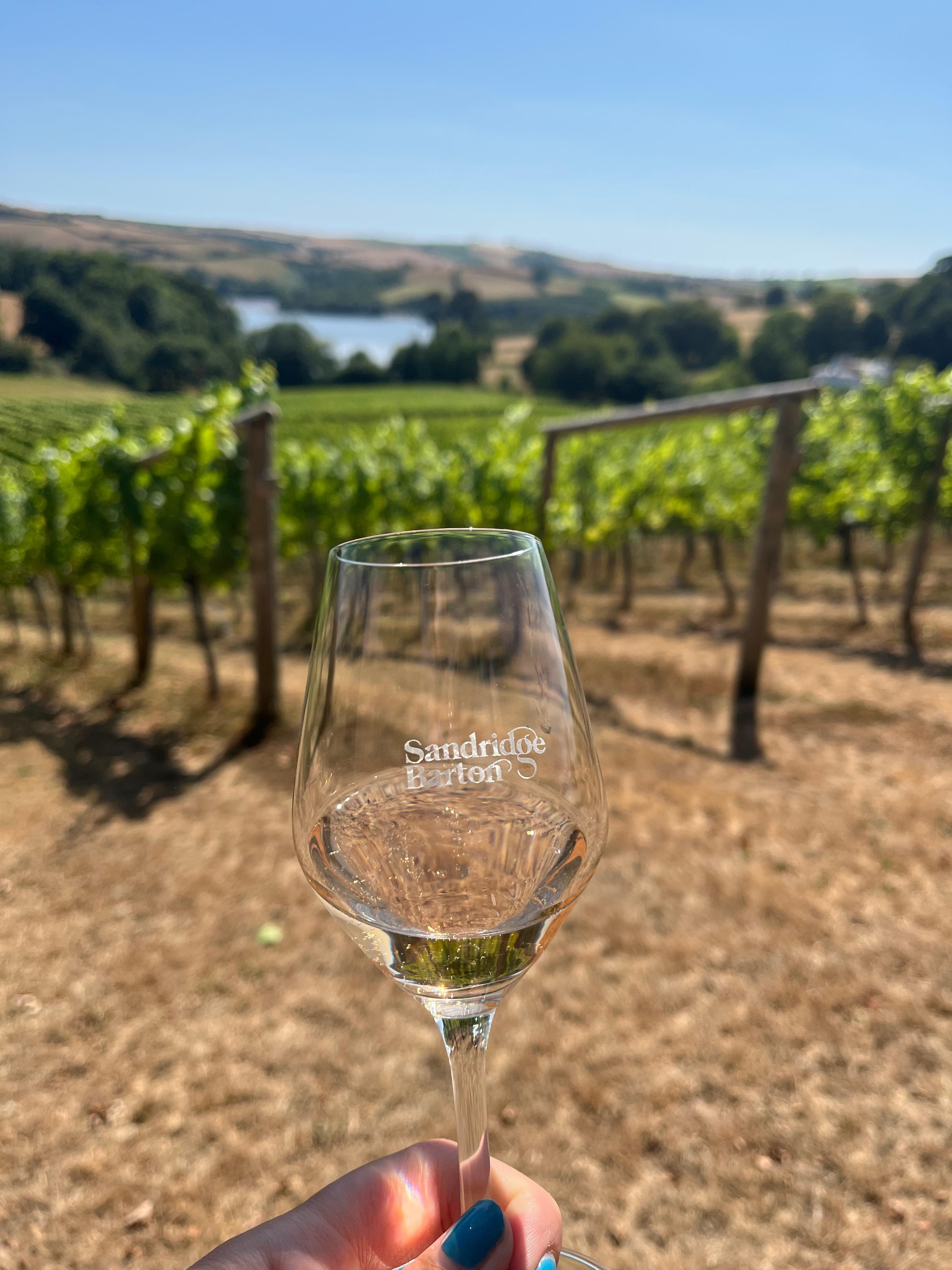
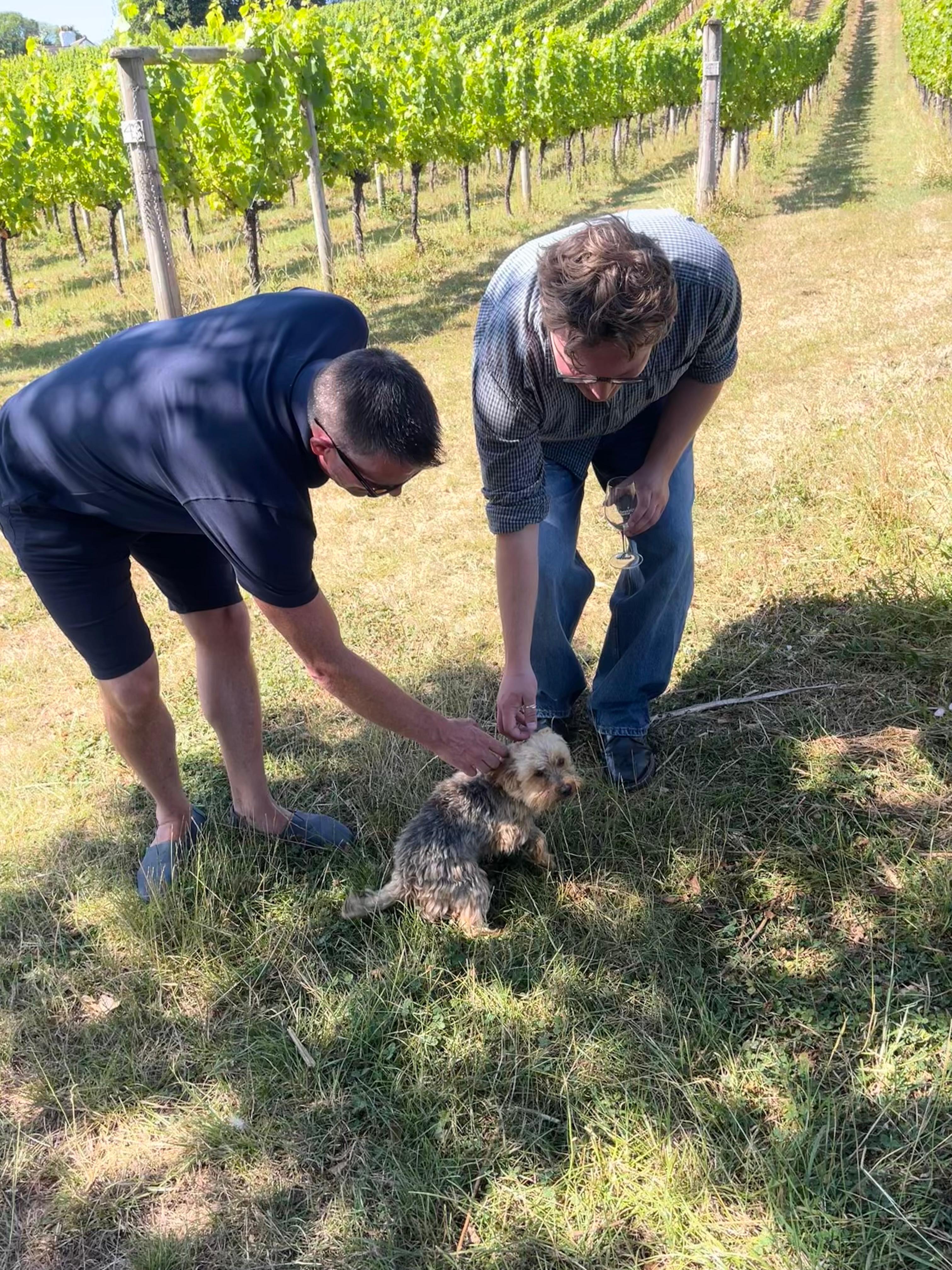
We tasted through some of the range with Tom, standing at the top of the vineyard looking at the view in glorious sunshine, the wines were tasting extremely well and if I hadn’t been a) driving that afternoon and b) pregnant, I could’ve happily taken root and polished off a few glasses immersed in my surroundings! Alas, it wasn’t to be and we studiously tasted the wines, wrote our notes and made our way back to the Land Rover, bumping into some of the vineyard team and their dog, Sparky!
On our return to the winery, we tasted through the rest of the range. It was a great opportunity to chat with head winemaker Charlie and taste some of the new vintages. The 2025 vintage of the Little Bee orange wine was great to taste, as it is totally different to previous years. An orangey pink colour due to 2025 being a much riper year than the previous vintage, it spent 3 weeks on the skins. The result is an expressive wine with blood orange and rosehip aromas on the nose, zesty with notes of bitter lemon, candied peel and a subtle grip of tannin, this is a complex yet fun wine.
My highlight of all the wines we tasted was their Pinot Blanc, which spent 4 days on the skins and 22 months in old French barrels. The wine is textural, smoky and salty with ripe stone fruit and utterly delicious.
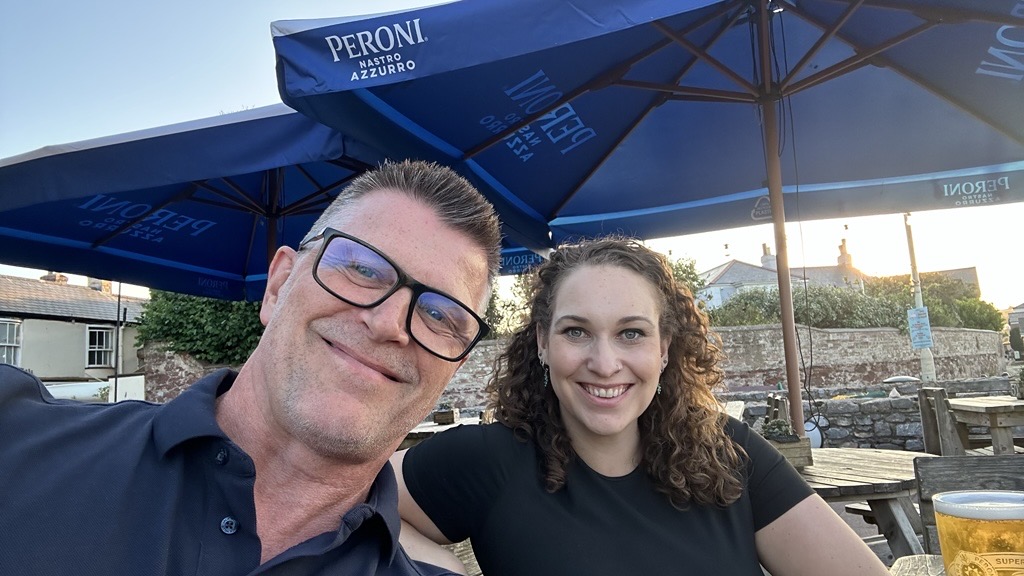
After we concluded our visit, we made our way to our B&B in Teignmouth for a dinner of fish and chips by the sea! All in all, not a bad day in the office and reinforced to us what a lovely part of the world Devon is and that when it comes to wine, Britain really can compete on an international stage.
Megan Clarke, Head Wine Buyer

Inspired to discover the wines of Sandridge Barton for yourself? We’re proud to champion exciting English wine producers and share their stories with our customers. To explore our Sandridge Barton range, ask your Account Manager for more details to discover a taste of Devon for yourself.
